

Annie O’Shaughnessy: Whole Teacher, Whole Student
By Susan Reynolds, The Saint Michael’s College Alumni Magazine

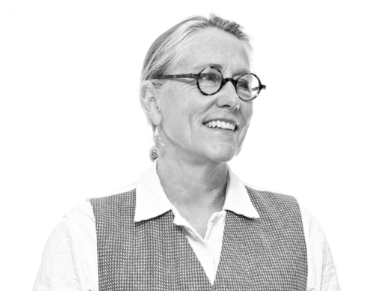
Annie O’Shaughnessy, SMC’s Holistic Restorative Education (HRE) Certificate Program Coordinator and Instructor, has always done her best work when she is able to bring her whole self to the job. In 1995, the school where she was teaching was not supportive of her restorative efforts to meet her students’ needs. “They wanted me to leave my heart and spirit at the door,” she recalls. “If we want our schools to be joyful places, we cannot teach from what Parker Palmer, the author of The Courage to Teach calls ‘the divided self.’”
O'Shaughnessy returned to teaching in 2009, at an alternative school where she was encouraged to bring her whole self to the job through restorative and relational approaches. It was the training in trauma-informed practices and restorative interventions that she received there that laid the foundation for the HRE program she would someday start. After a bike crash in 2015 caused a severe concussion, O’Shaughnessy was unable to continue working full time and instead chose to pursue her Masters in Education at Antioch University with a focus on mindfulness for educators. This experience not only improved her concussion symptoms but provided her with the expertise needed for the mindfulness component of HRE, which she believes is an essential skill for today’s educators and not just because it works to relieve stress.
“Today, there’s a breathless quality to most schools, no room or time for heart,” she says. “I had a hypothesis that if educators were able to slow down before they reacted to student behavior, they would ask more questions and make fewer assumptions.” In addition, she believed, if educators developed a strong mindfulness practice, they would not only be able to stay grounded in the face of challenging behaviors, but also uncover the implicit biases that undermine equitable responses. To test her hypothesis, in 2017 she started teaching “Transforming Teaching and Learning through Mindfulness and Restorative Practices,” and found, to her delight, that her hypothesis bore out. As important to her was the feedback from educators that the course had reinvigorated them, and in some cases, gave them what they needed to stay in the profession.
Inspired and emboldened by the impact of this one course, O’Shaughnessy approached Saint Michael’s Graduate Education department and pitched the idea of a four-course online certificate program — a program that would offer educators the opportunity to explore, apply and reflect on principles from four interconnected topics — Mindfulness, Restorative Approaches, Trauma-Informed Practices and Equity. Innovative and always open to improvement, Saint Michael’s said yes, and the first cohort launched in January of 2021.
Students in the program are all ages, at all stages and positions in their educational careers. Although nearly 100% online, the program uses specific and intentional techniques to build strong trusting relationships, wellness and meaningful dialogue. Each course uses mindfulness as a throughline to reflect more deeply on the issues facing them in their schools and classrooms and strengthen their resilience. As one teacher reported: “The program prioritized educators’ connecting and sharing about their work. It made my learning more valuable and real!” and another reported, “I was burned out and ready to quit teaching when I started, but now I feel reinvigorated.”
O’Shaughnessy keeps the program relevant by continuing to work as a consultant in private and public schools in Vermont and across the country. As a founding partner of the nonprofit the Starling Collaborative, she works with other consultants, educators and school leaders to develop best practices in a holistic restorative approach to education. In her own words, her hope is that the program builds a growing core group of educators who have a stronger and fuller set of tools to face the new challenges teachers face every day. Her four-course, one-year program begins with “Transforming Teaching and Learning Through Mindfulness and Restorative Practice” and concludes with a “Holistic Restorative Education Practicum.”


Comments